Butterfly teaches us freedom- To be a full grown butterfly and fly, you have to break out of the caccoon !!

As a future educator, we should create classrooms where Indigenous identities, cultures, languages, histories, and knowledge are respected. We must challenge stereotypes, teach accurate history, support belonging, and recognize that reconciliation requires meaningful actions, not just words.
INDIGENOUS EDUCATION
MY LEARNING JOURNEY

Readings -in Modules
The readings The Importance of Being a Historical Witness by Ann Chinnery and Respectful Indigenous Terminology from UBC emphasize the importance of understanding Indigenous history, respecting Indigenous identities, and recognizing our responsibilities as future educators. The first reading explains that being a historical witness means more than learning about past events; it involves acknowledging the harmful effects of colonialism, residential schools, and systemic racism that continue to affect Indigenous communities today. Even though we may not be personally responsible for past injustices, we have a responsibility to learn from history and take meaningful action to prevent similar harm in the future. The second reading highlights the importance of using respectful and accurate language when referring to Indigenous peoples. Terms such as First Nations, Métis, and Inuit represent distinct identities, cultures, and histories, and people should have the right to identify themselves. It also explains how certain terms were imposed through colonial systems and can carry painful historical meanings. Together, these readings remind us that reconciliation requires listening, learning, respecting differences, and taking responsibility for our actions. As future teachers, we must create inclusive classrooms where Indigenous histories, cultures, languages, and perspectives are valued, stereotypes are challenged, and students learn to respect one another. The main message is that understanding the past and respecting Indigenous identities are essential steps toward building a more just and inclusive future.
Settler Colonialism and Residential Schools
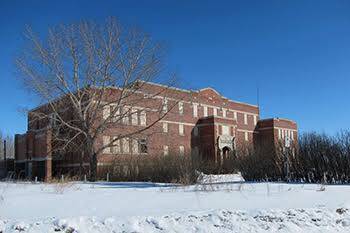
Honouring Our Children
This week’s learning made me think deeply about the experiences of Indigenous children in residential schools and about my responsibility as a future educator. When I read my assigned section from pages 69–80, I felt sadness, discomfort, and at times disbelief. I was especially unsettled by learning how children experienced punishment, abuse, poor health conditions, and inadequate care. Some children became seriously ill, and families were not always able to bring their children home for burial. I also learned that government officials were aware of some of the problems, but complaints were often ignored or not properly investigated. I kept asking myself how a system that was responsible for caring for children could fail them so deeply.
As I listened to the other groups present their sections, I began to see a much bigger picture. Each group shared different stories and information, but I noticed that many of the experiences were connected by loss, separation, injustice, and the effects of colonialism. Listening to others was important because I was not only learning facts; I was hearing different perspectives and noticing my own emotional responses. I used to think that understanding residential schools mainly meant knowing what happened historically. I am beginning to understand that I also need to recognize how these experiences continue to affect Indigenous families and communities.
Creating and looking at our Group 3 poster for pages 69–80 helped me organize some of the most difficult parts of our reading visually. Our poster showed themes of physical abuse, sexual and mental abuse, institutional structures, impacts on communities, and sports and relief. It reminded me that the children experienced different forms of harm within the same system. At the same time, the section on sports and recreation stood out to me because activities such as hockey and basketball could provide moments of relief and survival for some students. Seeing all these ideas together on the poster made me understand how complex the children’s experiences were.
After this learning, “honouring our children” means more to me than simply keeping children physically safe. I believe it means listening to them, respecting their identities, cultures and families, and making sure they feel that they belong. I was particularly troubled by the fact that children’s voices and complaints could be ignored. As a future teacher, I am responsible for creating an environment where children know that their voices matter and where they feel safe coming to me when something is wrong.
I am still questioning what meaningful reconciliation should look like in my everyday teaching. I know I need to learn more about Indigenous histories, cultures, languages, and ways of knowing rather than treating this learning as something that ends with one lesson or assignment. I want to carry forward the importance of listening, learning, respect, and responsibility. This experience reminded me that education has the power to harm when children’s identities and voices are disregarded, but I also believe education can become a place where children experience safety, dignity, belonging, and care.
During our group discussion on the assigned pages from Principles of Truth and Reconciliation, we shared our perspectives, reflected on the key ideas, and came up with the following insights:
TRC ONE PAGER-Truth & Reconciliation Commission: What we Have Learned: Principles of Truth & Reconciliation

Seminar : October 6, 2026- At First Nations Building
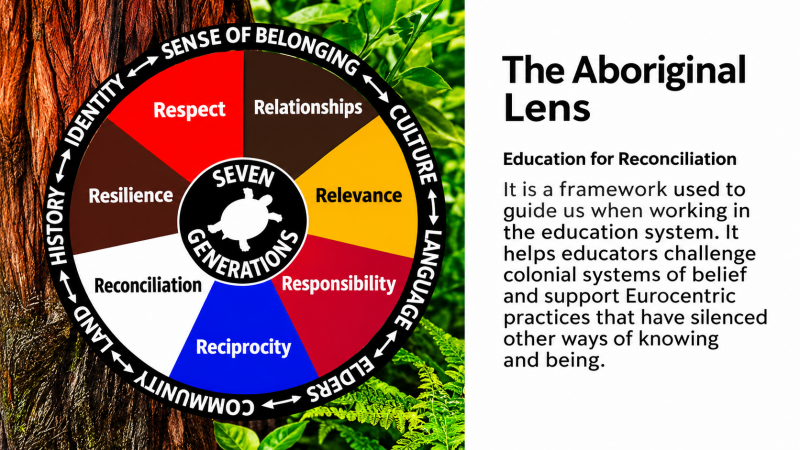
The Aboriginal Lens is a framework for Education for Reconciliation. It encourages educators to challenge Eurocentric beliefs and teaching practices that have silenced Indigenous knowledge and ways of being. It helps create an education system that respects Indigenous perspectives, cultures, identities, and ways of knowing.
One of my major takeaways from these discussions, including June’s ideas, was the importance of weaving threads together throughout our learning journey. I understood weaving threads as connecting our personal experiences, cultures, relationships, and different perspectives to create meaningful learning. June’s discussion about deep listening helped me reflect on the importance of understanding students beyond what we simply observe. For example, if a student is quiet and does not participate in classroom discussions, instead of assuming that the student is uninterested, I should take time to listen, build trust, and understand their experiences. This example connects to the idea of weaving threads because every student brings their own story, identity, and knowledge into the classroom. I also learned that education is not only about academic achievement but also about supporting students' social, emotional, and personal growth. As a future educator, I want to weave together my classroom learning, school visit experiences, and personal reflections to develop my teaching philosophy. My biggest takeaway is that meaningful teaching begins with listening, building relationships, recognizing students' strengths, and creating a classroom where everyone feels valued and included.
The quiet-student example is a classroom application of the deep-listening theme, rather than a verified example spoken by June.
Learning journeys in Indigenous Education- Placemat Activity
As a group, we discussed our learning journeys in Indigenous Education, our responsibilities as future teachers, our unanswered questions, and the actions we can take toward Truth and Reconciliation.
