Disability Visibility - Alice Wong
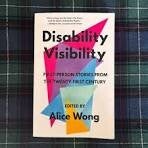
Disability VisibilityBook Club
Team Members:
Damanjeet, Fatana, Jasmine Gill, Jasmine Sekhon, Katarina
All these readings highlight the importance of disability rights, identity, inclusion, community, and social justice. Alice Wong reminds us that “Community is political,” meaning that staying silent about injustice can allow discrimination to continue. The readings challenge society's definition of what is considered “normal” and emphasize that people with disabilities should have the opportunity to share their own stories rather than being defined by others. Through Common Cyborg, we learned that assistive technology should support individual needs rather than force people to fit society's expectations. The discussion about body image and scars reminds us that our differences are part of our identities and should be respected rather than judged. Benjamin Lay's story teaches us the importance of courage and standing up against injustice, even when our own community disagrees with us. Ki’tay Davidson's story shows that love, compassion, advocacy, and collective action can challenge discrimination and create meaningful change. The Indigenous perspective also reminds us to see children beyond their diagnoses and respect their connections to family, culture, land, and community.
Key Takeaways
-
Disability does not define a person: Every individual has unique strengths, experiences, and abilities.
-
Inclusion means belonging: Everyone deserves opportunities to participate, learn, and grow.
-
Challenge the idea of “normal”: Differences should be respected rather than treated as problems that need fixing.
-
Listen to people's voices: People should have the opportunity to tell their own stories and make decisions about their lives.
-
Social justice requires action: Speaking up against discrimination is more meaningful than simply recognizing that injustice exists.
-
Community support matters: Relationships, compassion, and high expectations help people develop confidence and independence.
-
Recognize invisible struggles: We should approach others with curiosity and understanding instead of making assumptions.
See the whole child: Respect each student's identity, culture, family relationships, strengths, and individual needs.
My biggest takeaway as a future educator is that inclusion is not about making every student the same. It is about creating a classroom
where every child feels respected, valued, heard, and supported. Instead of expecting students to fit into the existing system, we should
work toward changing the system to meet the diverse needs of all learners.
Poem
A Diagnosis Is Not Enough
A child is more than a diagnosis,
and an individual is more than a box to be checked.
Everybody has unique qualities, tales, and identities,
and they should all be treated with respect, and care.
Colonial practices still influence health and care today, erasing voice and land.
So we must listen, honour, and learn—
and let Indigenous voices lead the way.

Main Connection Links
1. Benjamin Lay – Modern Slavery and Forced Labour
2. Ki’tay Davidson – Disability Poverty and Economic Justice
Disability Without Poverty – Cost of Living Survey
3. Ki’tay Davidson – Disability Rights in British Columbia